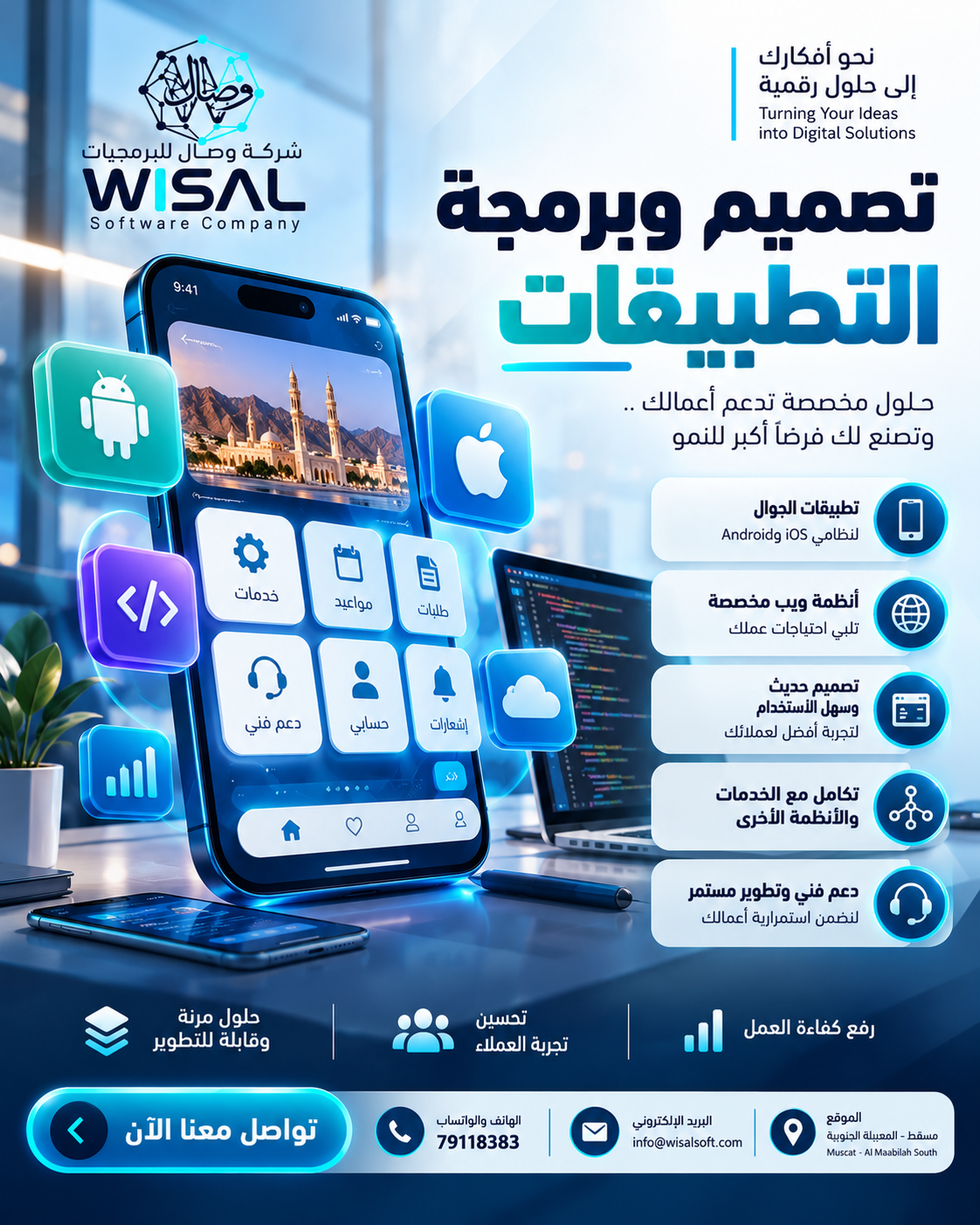
Mobile App Development
Mobile App Design and Development in Oman: Turning Your Idea into a Successful App
Mobile applications have become an important way for businesses to deliver services, improve customer communication, and develop their operations. As digital solutions continue to evolve, a well-designed application can help a business strengthen its online presence and offer customers a more convenient experience.
In this article, we explore the importance of mobile app design and development, common application types, and the main steps involved in turning an idea into a practical digital solution.
What Is Mobile App Design and Development?
Mobile app design and development involves understanding a project's requirements, planning the user experience, designing the interface, and building the software features needed to operate the application.
Depending on the project, this may involve a mobile application, an application connected to a website, or a solution integrated with an administrative system.
A successful application requires more than an attractive interface. Usability, performance, data protection, and alignment with users' needs are also essential considerations.
Why Does Your Business Need a Mobile App?
1. Make Your Services More Accessible
An application can provide customers with a dedicated interface for accessing business information and services, depending on its features.
2. Improve the User Experience
Clear layouts and intuitive navigation make applications easier to use and help customers complete tasks with less friction.
3. Enhance Service Delivery
Depending on the business, an application may support account registration, service requests, appointment booking, order tracking, and other digital functions.
4. Streamline Business Operations
An application can connect to an administrative dashboard or business system to help manage data, requests, and content according to project requirements.
5. Support Business Growth
A scalable application can be expanded with additional features as business requirements change and the user base grows.
What Types of Applications Can Be Developed?
Different businesses require different application solutions. Common examples include:
-
Business applications: Present services and make customer communication easier.
-
E-commerce applications: Display products and support the online shopping experience.
-
Appointment booking applications: Organize reservations and manage schedules.
-
Service applications: Deliver services and receive requests digitally.
-
Internal business applications: Help employees manage workflows and operations.
-
Integrated applications: Exchange data with websites or administrative and financial systems when required.
The right application type depends on the business model, required functionality, budget, and available resources.
What Are the Main Stages of App Development?
Application development generally involves several connected stages.
-
Requirements analysis: Define the application's objectives, target audience, and core features.
-
User experience planning: Organize screens, user journeys, and navigation.
-
Interface design: Create a clear visual design aligned with the project's brand identity.
-
Development: Build the required features and connect the application to relevant services or databases.
-
Testing: Check functionality, performance, and compatibility with target devices.
-
Launch: Prepare the application for release according to the selected platform's requirements.
-
Maintenance and improvement: Address issues and introduce enhancements when needed.
Careful planning helps clarify project scope and reduce unnecessary changes during development.
How to Choose the Right App Development Company
Before starting your project, consider the following:
-
The company's ability to understand and analyze your requirements.
-
A clearly defined project scope and agreed features.
-
Attention to usability and user experience.
-
Appropriate data protection and technical testing.
-
Integration options for other systems, where required.
-
Clear arrangements for support, maintenance, and future development.
It is often best to prioritize essential features first and plan additional functionality according to your goals and budget.
Mobile App Development with Wisal Software Company
At Wisal Software Company, we turn ideas and business requirements into practical technology solutions through application design and development tailored to each project.
We focus on intuitive interfaces, relevant business features, and potential integration with websites and other systems where required, while considering future scalability.
If you have an app idea or want to expand your business services digitally, contact us to discuss your requirements and explore suitable solutions.
Contact Wisal Software Company
-
Phone & WhatsApp: 79118383
-
Email: info@wisalsoft.com
-
Website: www.wisalsoft.com
-
Location: Al Maabilah South, Muscat, Oman
Wisal Software — Turning Your Ideas into Digital Solutions.